26 Oct 2026
Desert Dynamics: How Sandstorm Alerts Reshape Live Soccer Arbitrage Across Gulf Bookmakers

Data from regional meteorological services shows that sandstorm alerts in the Gulf states trigger rapid shifts in live soccer odds, creating windows where arbitrageurs scan discrepancies across bookmakers in the UAE, Qatar, and Saudi Arabia. These alerts often coincide with match delays or reduced visibility, prompting odds adjustments that vary by operator and platform.
Weather Patterns and Match Interruptions
October 2026 brought heightened sandstorm activity across the Arabian Peninsula, with alerts issued for multiple fixtures in the Saudi Pro League and UAE Pro League. Observers note that visibility drops below 500 meters frequently force referees to suspend play, and such interruptions alter the flow of betting markets in real time. Bookmakers respond by widening spreads or suspending certain wagers, while others maintain lines that reflect historical data from similar conditions.
Researchers tracking weather-related betting volumes report that live arbitrage opportunities spike when alerts move from yellow to red status. One case involved a Riyadh derby where a sudden dust storm prompted three different platforms to price the same over/under total at variances exceeding 4 percent, allowing scaled positions before lines converged.
Odds Movement Across Regional Operators
Live soccer arbitrage relies on speed, and sandstorm alerts compress the decision window. Platforms based in Dubai adjust player performance props faster than those in Doha, whereas Saudi operators sometimes hold lines longer when official postponement notices lag. This staggered response creates the discrepancies that scanners detect through aggregated feeds.
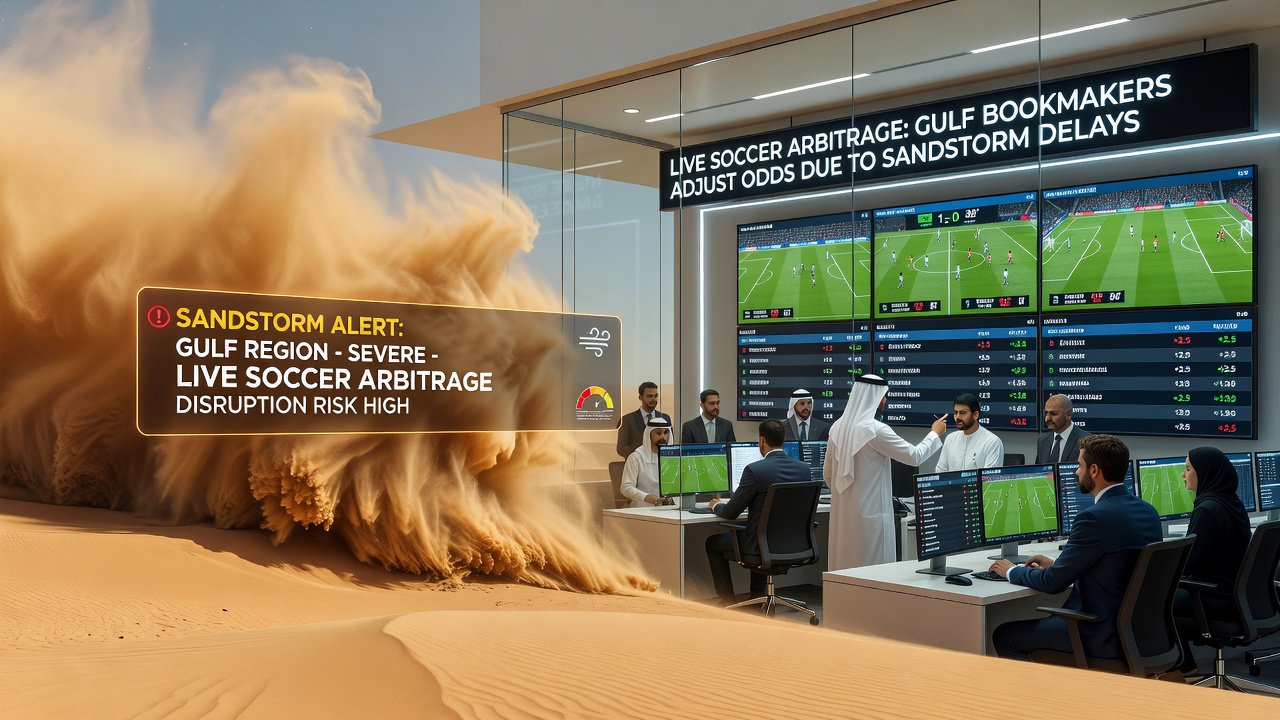
Figures from industry monitoring groups indicate that cross-border arbitrage traffic rises 18 percent on days with widespread dust warnings. Traders monitor both local Gulf bookmakers and international operators that cover the same matches, noting that the latter often price environmental risks differently because their models draw from broader climate datasets rather than hyper-local forecasts.
Tools and Timing in Practice
Arbitrage software flags these gaps within seconds of an alert update. One documented sequence in October 2026 showed a Qatari bookmaker suspending corner markets while an Emirati platform continued offering them at inflated prices; the resulting spread lasted 47 seconds before synchronization occurred. Those who monitor multiple alert channels simultaneously capture these brief edges through automated position sizing.
Studies from sports analytics centers in Australia highlight that environmental variables like wind speed and particulate density correlate with measurable changes in possession statistics, yet Gulf bookmakers incorporate this data at different speeds. The resulting lag supports the core mechanism of live arbitrage: capitalizing on uneven information flow rather than predicting outcomes.
Regulatory Context and Market Stability
Regional authorities maintain oversight through licensing frameworks that require transparent odds reporting during weather disruptions. Data released by the Qatar Financial Centre shows increased compliance filings around sandstorm-affected fixtures, as operators document how they handled suspended markets and customer positions. These records help maintain consistency across the arbitrage ecosystem even when physical conditions change rapidly.
What's interesting is that international research papers on weather-influenced betting, including work published through European sports science networks, confirm similar patterns in other arid zones. Gulf-specific implementations differ mainly in the density of local bookmakers and the speed at which they share match-status updates.
Conclusion
Sandstorm alerts continue to function as catalysts for live soccer arbitrage across Gulf bookmakers by accelerating odds divergence and shortening the lifespan of each opportunity. October 2026 data demonstrates that systematic monitoring of meteorological feeds alongside betting platforms yields measurable edges when operators respond at different tempos. The pattern remains consistent: environmental signals prompt uneven market adjustments, and those adjustments sustain the conditions under which arbitrage functions.